Lockouts · Clarington
Seized & Jammed Lock Opening
It is the coldest morning of the winter and the key goes halfway into the side door and stops. There is frost on the face of the cylinder, and the door on the shaded side of the house has done this before.
Seized & Jammed Lock Opening
In plain words
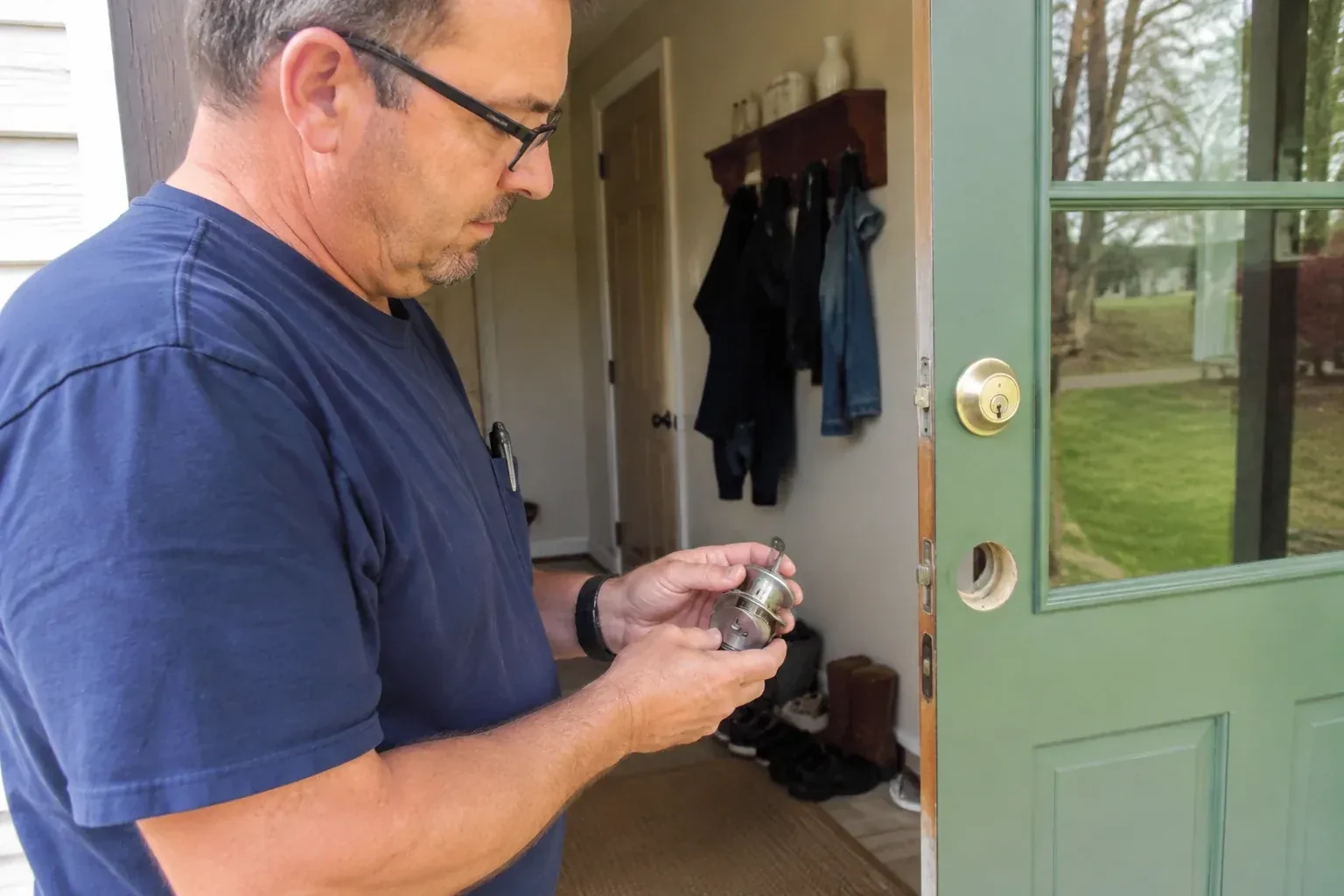
When the cylinder is the part that has seized, the work is about cleaning rather than force. Keyways collect dust, salt spray, metal filings and residue from sprays never meant for locks, and over time the pins stop lifting cleanly. The locksmith flushes the plug with a contact cleaner, applies a penetrating lubricant, and works the key in small movements until the plug turns. With the door open the cylinder comes out, is stripped and cleaned, gets fresh springs or pins where worn, and is dressed with the lubricant specified for that cylinder. A plug or shell that is worn, damaged or eaten through by corrosion is what gets replaced.
How the visit goesThe lock works, but only if you lean on the door with your hip while turning the key. After a week of humid weather the bolt is jammed against the strike plate, and without that push the key stops halfway.
Clarington
How the visit goes
Loading the door while the key is worked
With the lock family narrowed, the locksmith puts a hand on the door. Pushing it into the frame, pulling it out, and lifting on the handle each change how a bound bolt sits in its pocket, and the key is tried gently in each position. If the key frees up under one of those loads, the door is the cause. Where a second entrance is open, the same lock family is compared with the door swung wide, since a bolt that throws smoothly in mid-air and binds when closed has been pinched by the frame. Nothing is forced during this test; it is a diagnosis, not an attempt.
Thawing ice and clearing salt
Ice is melted, never chipped. A lock de-icer or gentle warmth on the cylinder face turns the frozen meltwater back to liquid so it can drain, and the key is then worked until the plug turns. Boiling water is kept well away, because it refreezes inside and can crack cold brass. Salt crust is flushed out with contact cleaner and the plug is dried thoroughly before any lubricant goes in, since salt and moisture sealed under lubricant keep corroding. The cylinder is then dressed with the lubricant specified for that product, applied once everything is dry. If the weatherstrip has frozen to the door, that bond is released and the seal wiped.
Keys that match the lock again
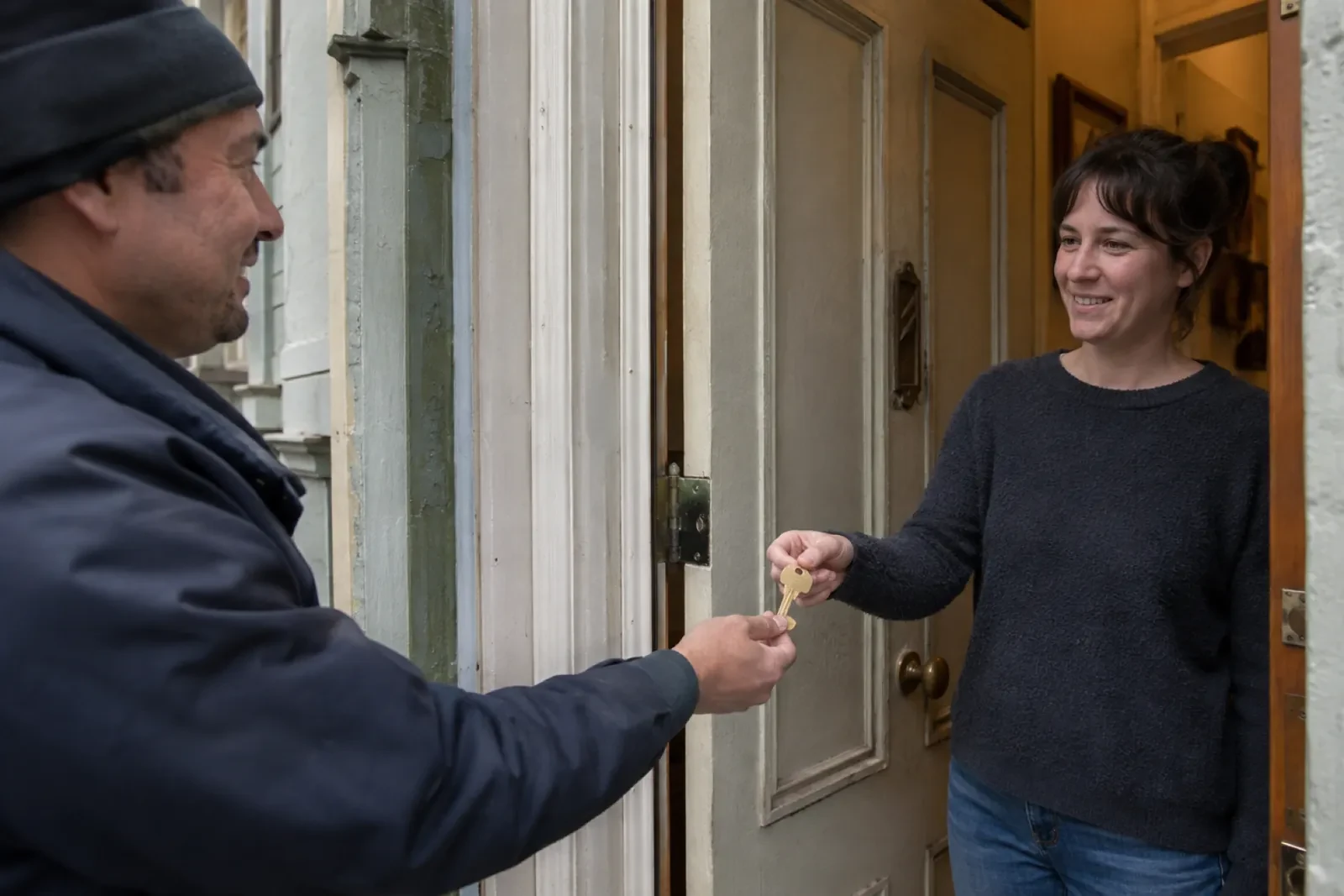
Where a worn or drifted key was part of the jam, you now hold a key cut from the code or from a fresh master, and every spare has been tried in the lock. Retire copies that needed force, and cut future spares from the good key rather than from each other, since each generation of copying adds error. Label the keys if several locks are involved. If the cylinder was replaced and pinned to your existing key, the whole house is still on one key. Keeping a written note of the keyway and, where it exists, the key code makes any future key a simple cut.
Seized & Jammed Lock Opening
In the van
- Plug follower and repinning kit
- Mortise case spring and hub
- Replacement tailpiece or cam
- Long hinge screws
- Replacement cylinder
What affects the quote
Same fees day, night or weekend
1Upgrades you choose on the spot
A keyhole cover, a storm door latch, a reinforced strike or a new deadbolt are optional extras some people add while the locksmith is there, each shown as its own line.
2Signs of an earlier struggle
A key snapped in the plug, a twisted cylinder or a bent latch from a screwdriver adds an extraction or a repair to the opening, and the locksmith points that out before quoting it.
3Service or replace the cylinder
A cylinder that can be stripped, cleaned and rebuilt is quoted as labour with a few small parts; one corroded through is quoted with a replacement cylinder matched to your finish and keyway.
Seized & Jammed Lock Opening: questions
How do I stop this from happening again?
Three habits cover most of it. Lubricate the cylinder with a dry lock product twice a year and keep oils out of it. Check that the door locks with no pressure on it each spring and fall, snugging hinge and strike screws when it starts to drag. Keep a lock de-icer handy and fit a keyhole cover on exposed doors. And act on the first stiff turn, because a lock that still turns is a smaller job than one that has stopped.
Can an old mortise lock in a century home be serviced rather than replaced?
Often, and keeping the original hardware is usually worth trying first, since it fits the door and suits the house, though condition and the availability of matching parts decide whether a repair is realistic. The case comes out of the door edge, the decades of dust and hardened grease are cleaned away, a broken spring or worn hub is replaced with a matching part, and the contact surfaces get fresh grease. If a bit key or a cylinder has worn, a new key is cut or the cylinder rebuilt.
What is a tailpiece, and why does it matter here?
The tailpiece is the flat bar that sticks out of the back of a deadbolt cylinder and turns the bolt mechanism when the key turns; on a knob or lever set the equivalent part is a cam or spindle. It carries all the twisting effort, so a bent, worn or broken one is the reason a key can turn without anything happening. It is a small part to replace, it comes in several lengths, and the right length matters.
Lockout Services
Seized & Jammed Lock Opening near you
Below is the full menu of lock and key work available in Clarington, written for people who are not locksmiths. Each entry says what the service is, when it makes sense, and roughly how a visit unfolds, so you can arrive at the door already knowing what the technician is going to do and why.