Commercial · Kendal
Panic & Exit Hardware in Kendal
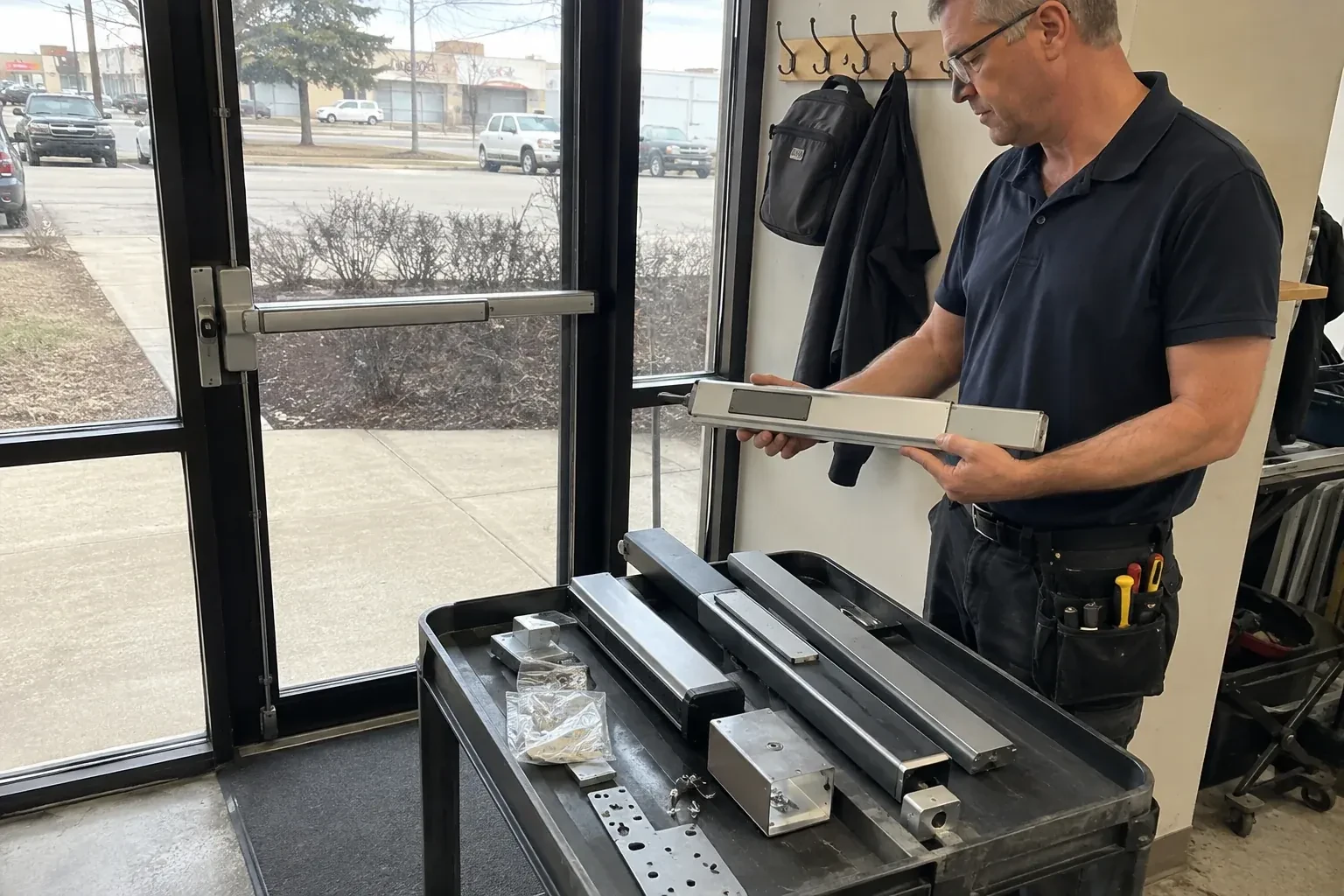
The fire inspector's note is blunt: the banquet hall's second exit still turns on a deadbolt, and the crowd it is rated to hold needs a door that opens under one motion, no key involved.
Panic & Exit Hardware
In plain words
Sometimes the hardware is already there and simply needs honest attention. A crossbar that has stiffened, a dogging function that no longer holds, or a strike that has drifted out of line are common finds on a device that has been in service for years. The locksmith services what can be serviced, adjusts what has moved, and replaces only the parts that have genuinely worn out, so a functioning exit device is not swapped wholesale when a cleaning, an adjustment and new fasteners would restore it.
How the visit goesSomeone at the front counter always has to unlock the side door by hand before the lunch rush, because the round doorknob out there was never meant to be an exit for a room this size.
Kendal
How the visit goes
Checking what is already fastened to the door
A surprising number of exit-hardware calls turn up a second lock nobody had mentioned: a hasp and padlock added for security, a slide bolt at the top of a rarely used door, or a deadbolt installed long after the original exit device. Each of these has to be understood before work starts, because an exit door can only be trusted to open under one motion if every fastening on it releases the same way. The locksmith notes what is there, explains what it means for the door's exit function, and works out with the owner what stays and what comes off.
Testing release force and full latch engagement
Once mounted, every device is cycled by hand repeatedly, checking that the touchpad or crossbar releases the latch under a light, even push and that the door swings clear of its frame and any threshold without binding. The strike is checked from both sides to confirm the latch seats fully when the door is pushed closed, not only when it is guided into place by hand. Any adjustment the testing reveals is made on the spot, before the device is called finished.
Room to grow into the next change
If the space changes use again, adds seating, or the occupant load creeps upward with a future renovation, the hardware fitted now is already suited to a use that requires it, rather than something that will need revisiting the moment the room grows busier. Keeping a note of the occupant load the current hardware was specified for means a future change can be checked against that number before it becomes an inspector's finding rather than a planned upgrade.
Panic & Exit Hardware
In the van
- Coordinator for door pairs
- Outside trim (pull, lever or cylinder)
- Strike and reinforcement
- Rated exit device
- Door closer
What affects the quote
Same fees day, night or weekend
1Number of openings involved
One door with a single device is the simplest case. A building with several affected exits, such as doors from a stairway plus an assembly-room exit, is quoted as the sum of each opening's own work.
2Number of keys or dogging cylinders
Cutting keys for the outside trim and providing a dogging key or keyed dogging cylinder for the device is counted individually, the same way any keyed hardware is.
3Signage and labelling
Any exit signage or alarm labelling the opening needs is a small addition on its own, but it is named in the quote rather than assumed to already exist on the door.
Panic & Exit Hardware: questions
What is the difference between a rim, mortise and vertical-rod device?
A rim device sits on the surface of the door and suits most single openings, including many tall and fire-rated doors on their own. A mortise device fits into a pocket cut in the door's edge and is chosen where a heavier case or a particular trim style is wanted. A vertical-rod device runs rods to the top, or top and bottom, of the frame, which suits an opening that specifically needs latching at more than one point rather than height by itself.
When does a door actually need this hardware rather than a regular lock?
It comes down to occupancy and occupant load rather than preference. Rooms used for assembly, such as banquet halls, places of worship or gyms, and doors serving a stairway in a busier building, are where this hardware becomes the standard choice instead of a keyed lock on the exit side. A fire inspector or building official is the practical way to confirm whether a specific room has crossed that line.
How much force does the door need to open with?
Hardware standards set a maximum, not a target: an exit device is built to release the latch under a firm push, no more than about 15 pounds of force applied at the touchpad or crossbar, roughly the pressure of a light shove rather than a heave. That ceiling covers people who cannot lean hard into a door, so the swing stays open to anyone moving toward it under pressure.
Commercial Locks
- Master Key System DesignThe new wing was built with its own brand of cylinder, so the two-year-old keys from the original…
- Access Control InstallationSomething went missing from the storeroom over a weekend, and when you ask who was in the building…
- Commercial-Grade Lock ReplacementOvernight someone forced the back door, and the cylinder face is scarred, the metal around the…
Panic & Exit Hardware near you
These are the services we bring to doors across Kendal. Residential work covers lockouts, rekeying, lock replacement, deadbolts, smart locks and older hardware brought back to life. Commercial work covers storefront doors, exit devices, closers, master keys and safes. Vehicle key cutting rounds out the list when it is needed.